
Previous
Next
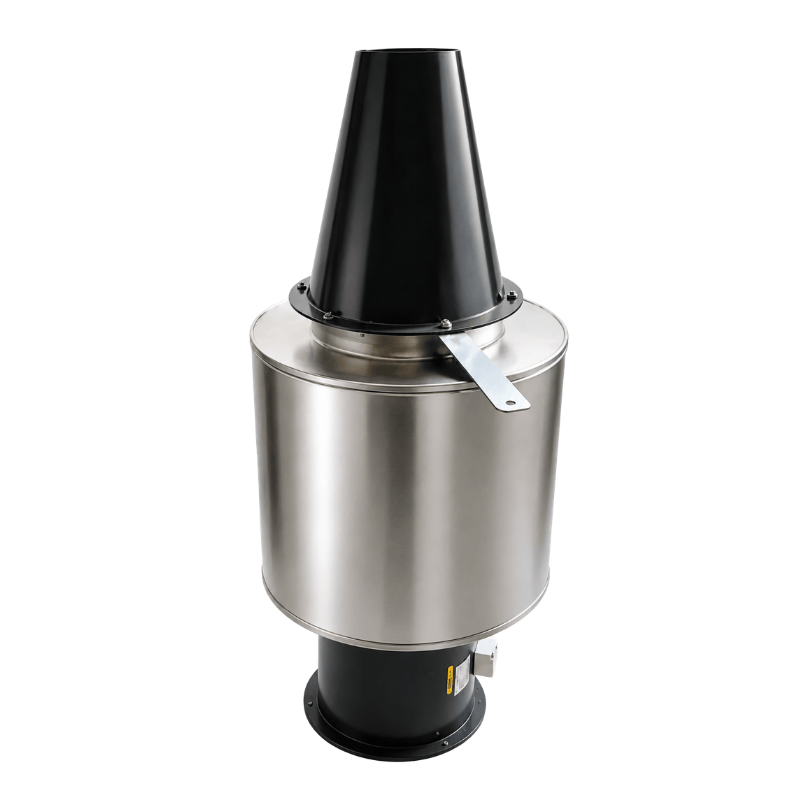
Induction Jet Fan
- 1. Ductless design saves installation space Utilizing the principle of induced jet ventilation, this system reduces or eliminates the need for traditional ductwork, lowers building floor-to-ceiling height requirements, improves space utilization, and cuts installation costs.
- 2. Efficient air induction for rapid air quality improvement High-speed jets drive surrounding air to create continuous circulation, effectively eliminating ventilation dead zones and rapidly exhausting vehicle exhaust, smoke, and other harmful gases to enhance overall air quality.
- 3. Energy-efficient with low operating costs Optimized impeller and airflow guide structures reduce energy consumption while maintaining high airflow volume and long-range air delivery, making the system ideal for continuous, long-term operation.
- 4. Low-noise operation; stable and reliable The impeller undergoes high-precision dynamic balancing and is paired with a premium low-noise motor, ensuring smooth operation with minimal vibration—suitable for noise-sensitive environments such as underground parking garages and commercial buildings.
- 5. Diverse models to meet various project requirements Supports a wide range of specifications—including airflow volume, thrust, motor power, control methods, and fire-safety smoke exhaust configurations—allowing for customization based on the specific needs of underground garages, tunnels, industrial plants, and more, providing efficient solutions for various ventilation projects.
Description
By using high-speed jets to induce the movement of surrounding stationary air, this system achieves air exchange and optimizes airflow patterns within large spaces without the need for extensive traditional ductwork. Widely used in settings such as underground parking lots, stadiums, workshops, warehouses, and tunnels, the equipment offers significant advantages, including space savings, high energy efficiency, and flexible installation.
The induction jet fan is a high-efficiency ventilation device that utilizes high-speed airflow to create an induction effect, enabling directional air transport and circulating ventilation. Unlike traditional ducted supply and exhaust systems, induction jet fans generate effective airflow without requiring large-scale ductwork, thereby significantly boosting ventilation efficiency while reducing both initial construction costs and long-term maintenance expenses. These products are widely applied in underground parking facilities, garages, subway stations, tunnels, civil air defense projects, logistics warehouses, large commercial complexes, and industrial plants.
Featuring high-efficiency axial-flow impellers and low-noise motors—combined with an aerodynamically optimized design—the fan generates a stable, high-speed jet. This rapidly drives indoor air circulation, effectively eliminates stagnant air zones, and enhances the extraction efficiency of exhaust fumes, smoke, and harmful gases. The fan operates smoothly with low noise and minimal energy consumption; specifications can be tailored to project requirements, including options for unidirectional or bidirectional airflow, fire-rated smoke extraction capabilities, and variable frequency drive (VFD) control.
Beyond improving air quality and ventilation efficiency, the induction jet fan integrates with fire smoke extraction systems to rapidly control smoke flow during emergencies such as fires, providing reliable support for personnel evacuation and firefighting operations. It serves as a vital component of ventilation systems in modern underground spaces and large-scale buildings.